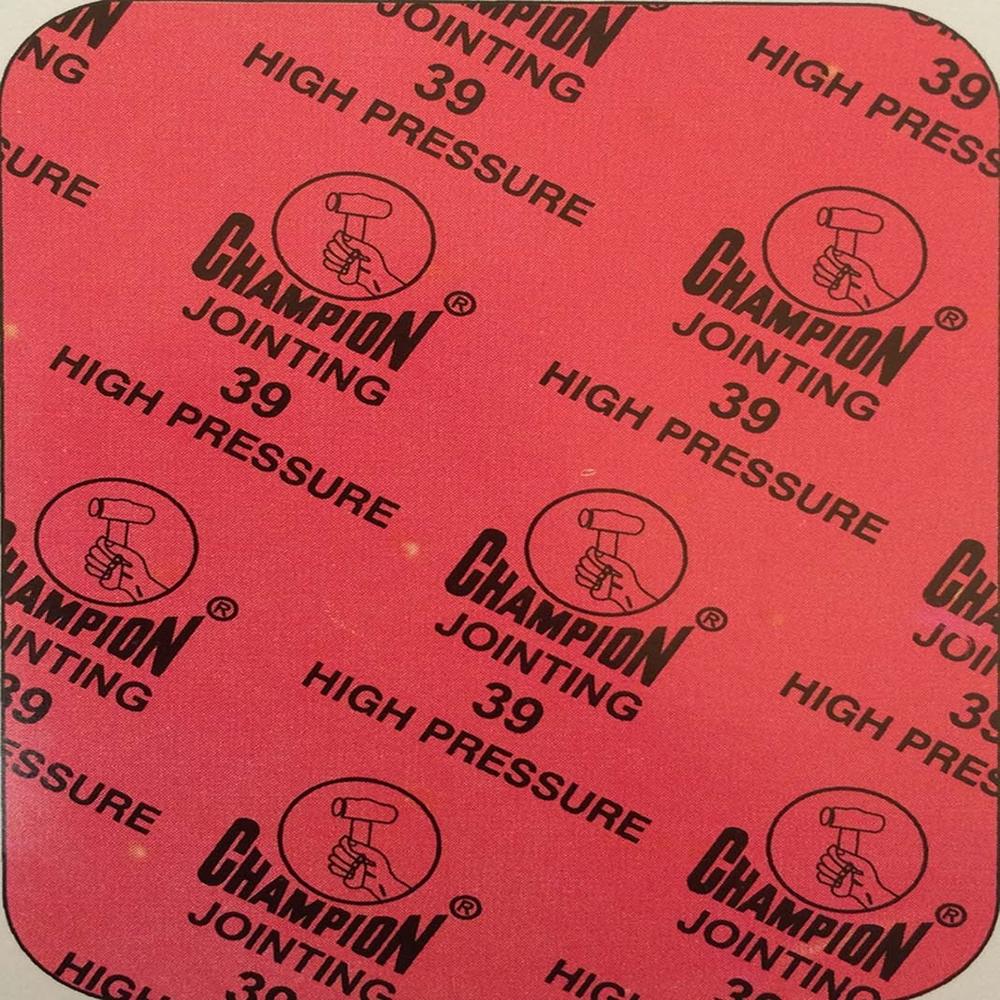
About Jointing Sheet
Manufactured from quality of Asbestos Fibre and vulcanized with special rubber compound to meet with the exacting requirements of modern industry.
Recommended for use against dry and wet steam, water, gases, alkalies, oil at normal temperatures, chemicals fuels, etc. and general engineering. Style 39 can also be provided with wire gauze insertion and graphited finish.
Precision Sealing for Harsh Industrial ConditionsDesigned to meet rigorous industrial standards, this jointing sheet delivers outstanding sealing performance in environments exposed to high temperatures and pressures. Its robust composition resists oils, fuels, steam, mild acids, and alkalis, making it versatile for a range of critical applications.
Robust Construction and VersatilityManufactured using either compressed asbestos or non-asbestos fibers with a resilient synthetic rubber binder, the product offers remarkable mechanical strength, compressibility, and elasticity. The thickness variations and customizable sizing options ensure suitability for diverse sealing and gasketing needs.
Practical Application and HandlingWith untrimmed or trimmed edge choices and smooth surface finish, the jointing sheet is easy to cut and install on various flanges and joint surfaces. Its oil resistance, heat tolerance, and tailored hardness ensure a long-lasting, reliable seal in many industrial systems.
FAQ's of Jointing Sheet:
Q: How do I select the correct thickness of jointing sheet for my application?
A: Choosing the right thickness depends on the operating pressure, temperature, and surface irregularities of the joint. For higher pressures or uneven surfaces, thicker sheets (closer to 6 mm) provide better sealing. Consult technical guidelines for optimal thickness selection within the 0.4 mm to 6 mm range.
Q: What are the key benefits of using this jointing sheet in industrial sealing?
A: This jointing sheet offers excellent resistance to high temperatures (up to 400C) and pressures (up to 100 bar), and is compatible with aggressive media like steam, oils, fuels, mild acids, and alkalis. Its high tensile strength, flexibility, and rebound recovery enhance sealing performance and longevity.
Q: Where is this jointing sheet most commonly used?
A: It is widely applied in flange sealing, pipeline joints, and machinery maintenance across industries like oil and gas, chemical processing, power generation, and manufacturing-especially where durable, oil- and heat-resistant gaskets are required.
Q: What is the process for installing this jointing sheet?
A: Cut the sheet to match the flange or joint dimensions, taking care to choose the appropriate thickness and type. Install with either untrimmed or trimmed edges based on preference, ensuring surfaces are clean and aligned to achieve an optimal seal. Bolting should be tightened progressively and evenly.
Q: When should I use an asbestos versus non-asbestos jointing sheet?
A: Asbestos-based sheets are chosen for traditional applications with extreme heat resistance; however, non-asbestos alternatives are recommended for safer handling and to meet modern environmental and health regulations, especially in environments with regulatory restrictions.
Q: What is the water absorption rate and why is it important?
A: The jointing sheet absorbs less than 10% of its weight in water, minimizing swelling and degradation during service. This low absorption rate helps prevent gasket failure and ensures long-term sealing even in humid or wet environments.








 Send Inquiry